
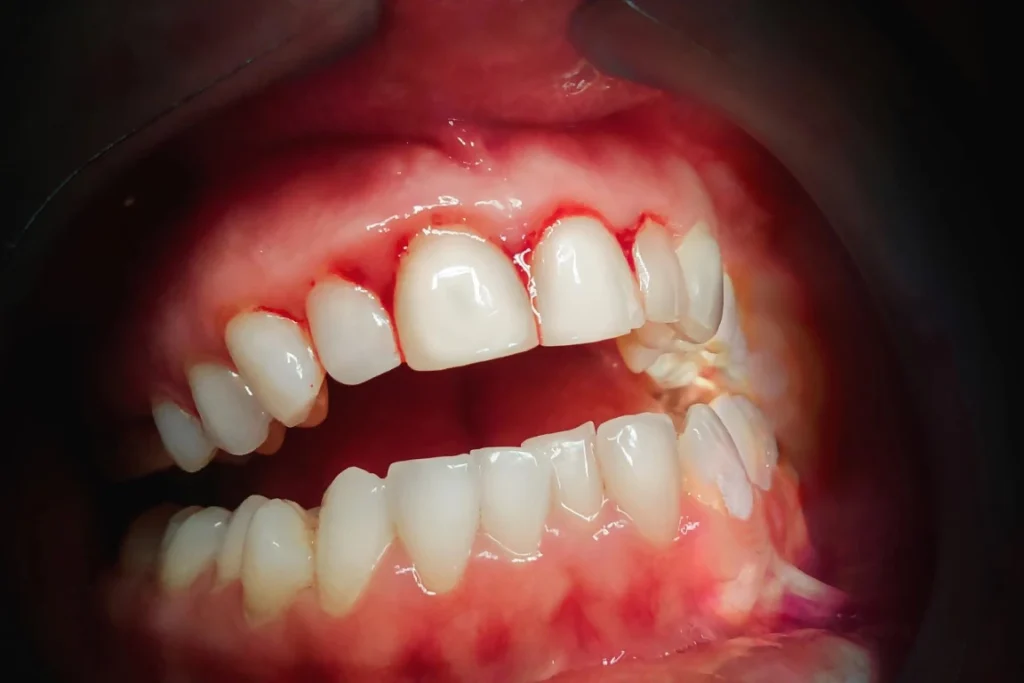
Every time you visit your dentist, your dental team will check for signs of oral health problems. It isn’t uncommon for dental patients to exhibit early signs of oral ailments like cavity development. While cavities aren’t unusual, there is one even more common oral health problem. In the U.S., about 1 in 4 adults showed signs of gum disease.
In its earliest stages, this disease is reversible, making early identification essential. As it progresses, treatment becomes increasingly difficult, and the problem may be chronic. While early treatment is important, some dental patients may not know the common signs and symptoms of gum disease.
In this blog, we’ll discuss some of the most common signs to help you keep your smile safe for years to come.
1. Red, Inflamed Gums
One of the first signs a dental patient may notice when experiencing gum disease is red, inflamed gums. When your gums are healthy, they are light pink or coral and firm to the touch. However, as your gums become irritated by the presence of bacteria, they become inflamed and irritated. In many cases, this inflammation is caused by a bacterial infection, making it important to closely follow a comprehensive dental hygiene routine and schedule a check-up with a trusted dental team.

2. Bleeding While Brushing
Another common symptom of gum disease that dental patients will notice is bleeding while brushing or flossing. In some cases, this bleeding may indicate that you’re brushing too hard and being too aggressive with your floss. However, if you address this and brush and floss more gently, and your gums continue to bleed, this may indicate potential gingivitis or periodontal disease. Bacteria in your gums lead to inflammation, which weakens the tissue, leading to chronic bleeding while left untreated.
3. Chronic Bad Breath
It isn’t uncommon for meals to impact the smell of your breath and taste in your mouth. However, this should go away once you’ve brushed your teeth and flossed. If you brush and floss regularly and are still struggling with chronic bad breath, also known as halitosis, this may indicate that you’re experiencing gum disease. As bacteria build up in your gums, you may experience infections along your gumline, which leads to changes in the smell of your breath and, in some cases, chronic bad breath.
4. Temperature Sensitivity
Some temperature sensitivity is normal, especially as you age and your enamel wears down. Worn-down enamel exposes the underlying nerves to the elements, making your teeth more sensitive when you eat or drink. However, if you are experiencing this temperature sensitivity in addition to other symptoms, like gum recession or bleeding when brushing, this indicates gum disease. As your gum disease progresses, your gums may recede, exposing the root of your tooth. This exposed root is more sensitive, causing discomfort while eating and drinking.

5. Receding Gums
As your gum disease progresses and the infection continues to spread, the tissue begins to pull away from your teeth. This recession becomes increasingly worse as bacteria grow and spread. In more extreme cases, continually receding gums may also expose the underlying bone structure, which can compromise the integrity of your teeth. This may also lead to bone loss, which can be difficult to treat or address without bone grafting, making it essential to reach out to a trusted dental team as soon as possible to identify and treat the problem.
6. Loose Teeth
As mentioned above, your receding gums may expose the root of your tooth and underlying bone. Not only does this pose a significant risk for infection, but it also means you may have loose teeth. Once your gum disease reaches this stage, it can be difficult, if not impossible, to restore the strength of your tooth, and extraction may be the best course of action. While you may consider letting your teeth fall out independently, it’s best to contact a dentist for support. Failing to seek professional dental treatment and allowing this advanced infection to continue untreated puts you at extreme risk of developing life-threatening diseases, including sepsis.

Expert Treatment for Gum Disease in North Ogden
There are several stages to gum disease, and it’s important that you work with a reliable dental team as soon as possible to prevent this problem from becoming irreversible. In its earliest stages, small changes to your oral hygiene routine can save you from lifelong issues. If you’re looking for a reliable dental team in North Ogden ot help you address gum disease, turn to our team at North View Dental for support.
Whether you’re in the earliest stages of gum disease or it has progressed to periodontal disease, our team has the training and experience to help you through it all. With the support of our team, you can protect yourself from tooth loss, bone loss, abscesses, and other more severe health complications.
If you want to schedule a dental exam with our team and identify the early signs of gum disease, don’t hesitate to contact us today.

